Live in time with your body.
This page follows one day of your body, from dawn to night.
Eating, sleep and light in time with your body clock. Evidence-based, no starving, no hype.
· Light
First light sets the clock.

Your inner clock does not know what time it is until it sees daylight. A few minutes by a window or outside in the morning tell it the day has begun, so in the evening it finds sleep more easily.
Evidence: strong[1]
· First meal
Morning is for eating.
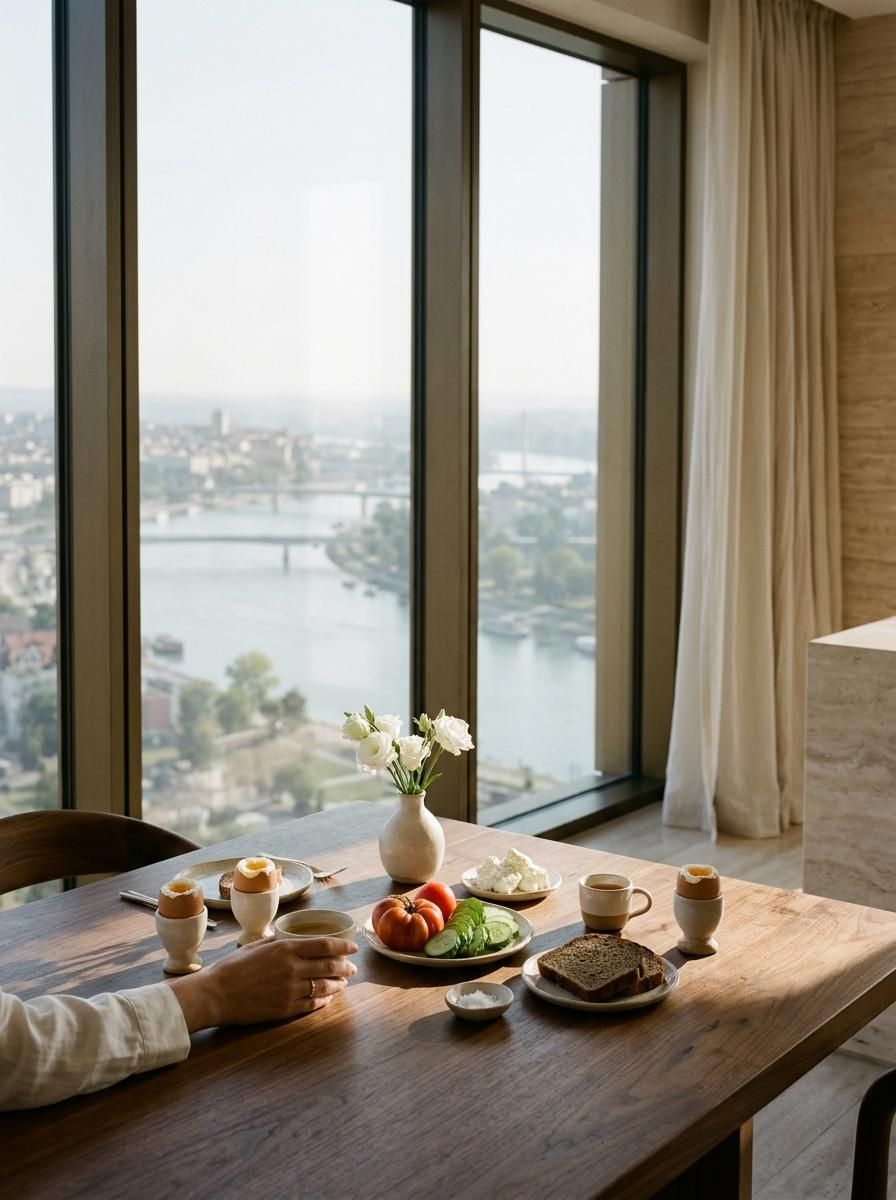
Your body usually handles the same meal more calmly in the morning than late at night, so blood sugar rises less. That is why rhythm starts not with what you eat, but when.
Evidence: moderate[2, 3]
· The dip
The 3 pm dip is not laziness.
“I can’t focus in the afternoon, and I slept eight hours.”

The afternoon energy dip is part of the daily rhythm and happens to most people. A heavy lunch can deepen it. A meal with enough protein and a few minutes of walking in daylight usually help more than another coffee.
Evidence: moderate[4]
· Dinner
Same meal, different hour.
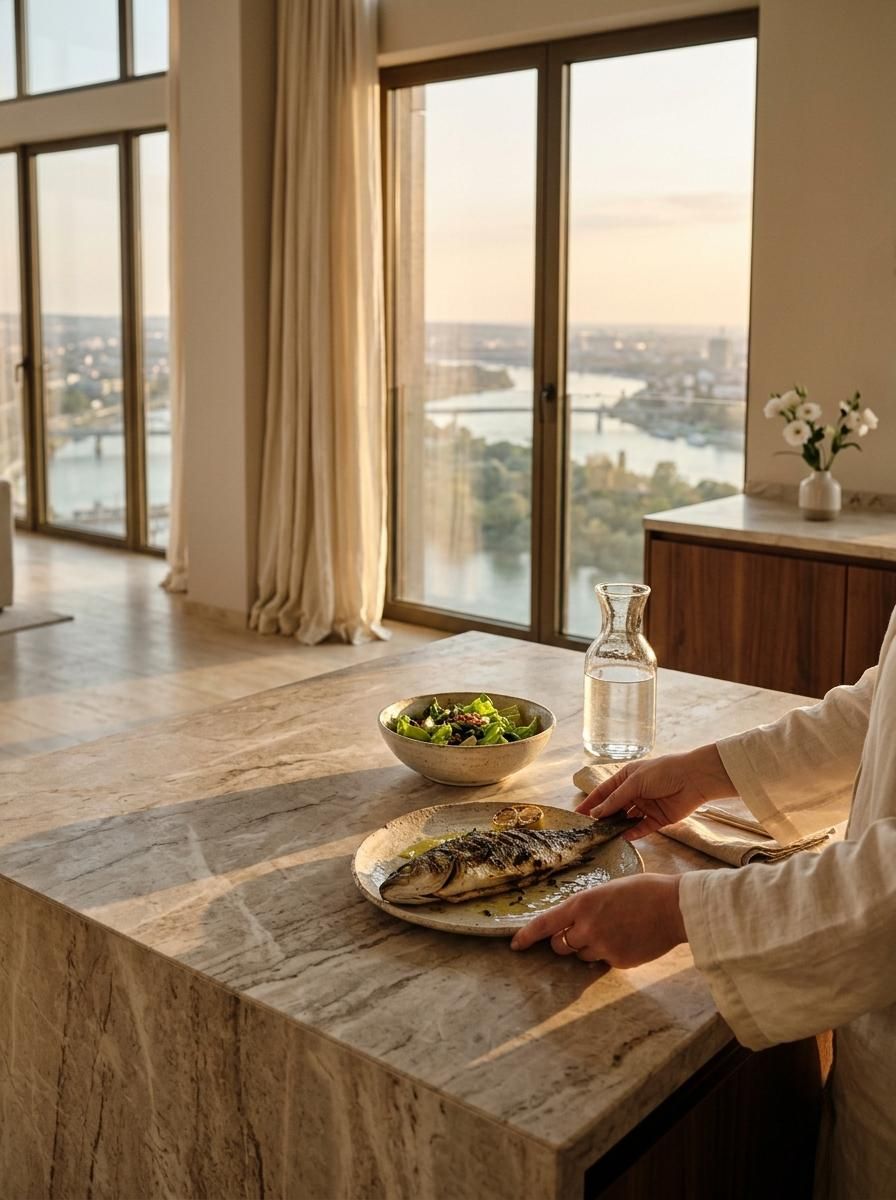
As the day goes on, your body handles a large meal less well. An earlier, lighter dinner gives it time to settle before sleep. You do not have to starve: just move the weight of your day toward the morning.
Evidence: moderate[3, 5]

· Night
It is late.
Your body is releasing melatonin and getting ready for sleep. Bright screen light and late snacks get in its way.
Evidence: strong[6]
Save this for the morning.
BioRitam is an editorial team writing about eating, sleep and light by the body clock. Every claim carries its level of evidence and a source.
Our first guide, Fasting by Your Body Clock, arrives before the Orthodox Nativity Fast begins on 28 November.
Sources
- Entrainment of the human circadian clock to the natural light-dark cycle. Wright KP Jr i sar., Current Biology, 2013.
- Endogenous circadian system and circadian misalignment impact glucose tolerance via separate mechanisms in humans. Morris CJ i sar., PNAS, 2015.
- Early time-restricted feeding improves insulin sensitivity, blood pressure, and oxidative stress even without weight loss in men with prediabetes. Sutton EF i sar., Cell Metabolism, 2018.
- The post-lunch dip in performance. Monk TH, Clinics in Sports Medicine, 2005.
- Effectiveness of early time-restricted eating for weight loss, fat loss, and cardiometabolic health. Jamshed H i sar., JAMA Internal Medicine, 2022.
- Exposure to room light before bedtime suppresses melatonin onset and shortens melatonin duration in humans. Gooley JJ i sar., Journal of Clinical Endocrinology & Metabolism, 2011.
Educational content, not medical advice.